
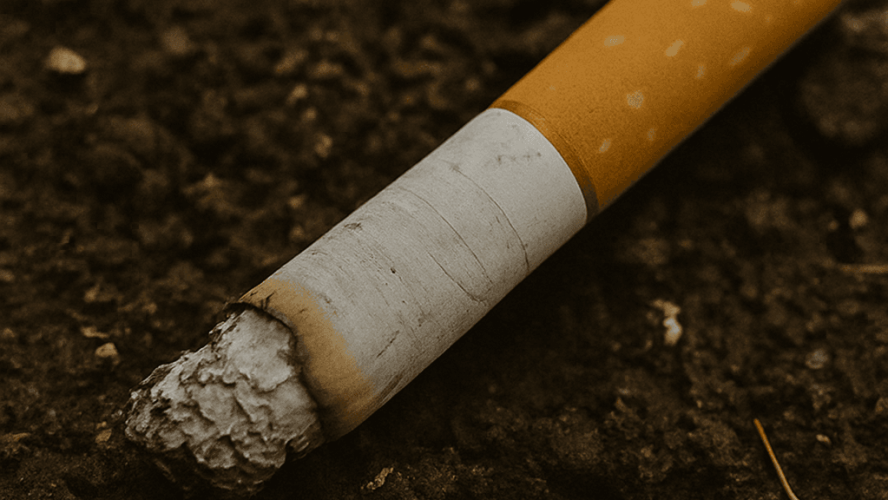
Every year, an estimated 4.5 trillion cigarette butts are discarded around the world, making them the most littered item on Earth. While many people believe that cigarette butts decompose quickly like paper or leaves, the truth is far more alarming. Cigarette filters are not biodegradable in the way most assume. Instead, they contribute significantly to environmental pollution, especially in marine and urban ecosystems.
What Are Cigarette Filters Made Of?
Cigarette filters are typically made of cellulose acetate, a form of plastic derived from plant fibers but chemically treated to resist degradation. While the word “cellulose” sounds natural, the transformation into acetate creates a dense material that can take 10 to 15 years or longer to break down in the environment.
The misconception that filters are made from cotton or paper contributes to careless littering. When tossed onto sidewalks or into storm drains, cigarette butts often travel directly into rivers and oceans, where they persist for years. During this time, they release toxic substances like nicotine, arsenic, lead, and other harmful chemicals into the environment.
Do Cigarette Butts Ever Fully Degrade?
Technically, yes—but not quickly or cleanly. In controlled industrial composting conditions, cellulose acetate can eventually degrade, especially if it’s combined with heat, UV light, and microbial activity. However, in the real world, most discarded cigarette butts are exposed to minimal sunlight, buried in soil, or submerged in water—conditions where degradation is extremely slow.
As they break down, cigarette filters don’t vanish—they fragment. These fragments become microplastics, which are even more dangerous because they’re ingested by marine animals, contaminate water supplies, and may enter the food chain. A single butt can leach enough toxins to kill half the fish in a liter of water.
The Broader Environmental Impact
Discarded cigarettes aren’t just unsightly—they’re environmentally destructive:
- Water pollution: Studies show that the chemicals in a single cigarette butt can contaminate several liters of water.
- Wildlife hazard: Birds and marine animals often mistake butts for food, leading to poisoning or intestinal blockage.
- Fire hazard: In dry climates, improperly discarded cigarettes can spark wildfires that destroy homes and habitats.
Cigarette litter is also expensive. Municipalities across North America spend millions each year on cleanup efforts. In some cities, cigarette butts account for 30% to 40% of street litter by item count.
Are Biodegradable Cigarettes a Solution?
In response to growing awareness, some companies have begun marketing biodegradable cigarette filters made from materials like hemp, cotton, or bamboo fiber. While promising, these products are still niche, not widely adopted, and not always genuinely biodegradable unless they meet ASTM D6400 or EN 13432 composting standards.
Unfortunately, most biodegradable filters degrade only under specific composting conditions—not in a roadside ditch or public park. Until these products are mass-produced and certified for real-world breakdown, they remain a minor piece of a much larger puzzle.
What Can Be Done?
Reducing cigarette litter and its environmental impact requires a multi-faceted approach:
- Public education: People need to understand that filters are not harmless or quickly degradable.
- Recycling initiatives: Programs like TerraCycle’s Cigarette Waste Recycling Program accept used filters and turn them into plastic pallets and other materials.
- Fines and enforcement: Some cities have introduced hefty fines for littering cigarette butts, alongside public ashtray installations.
- Switching to filterless cigarettes or vaping: While not environmentally perfect, alternatives like loose-leaf tobacco or regulated vape products can reduce filter waste.
Conclusion
Cigarette filters may seem small and harmless, but they’re among the most persistent pollutants in the environment. They are not truly biodegradable in natural settings and often turn into microplastics over time. Educating the public, improving waste disposal infrastructure, and supporting the development of alternative products are essential steps toward reducing the environmental toll of smoking.